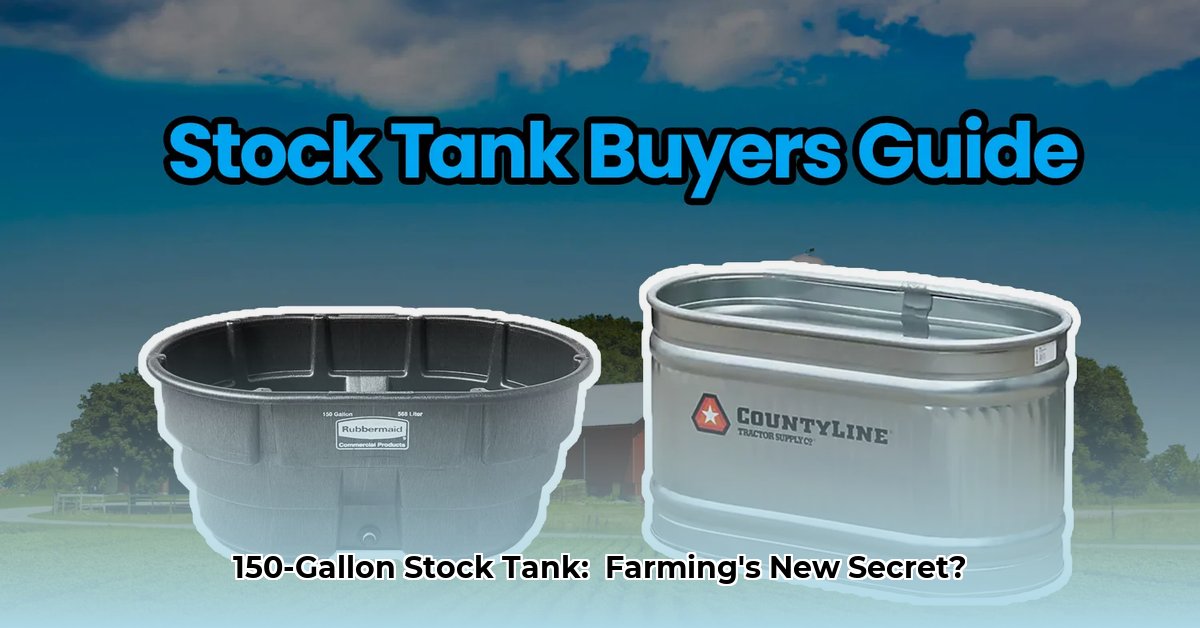
Water conservation is paramount in modern agriculture. Efficient water management directly impacts profitability and environmental stewardship. The Tractor Supply 150-gallon stock tank offers a viable, cost-effective solution for water storage on farms and ranches of all sizes. This guide provides a practical, step-by-step approach to selecting, installing, maintaining, and integrating this tank into a broader sustainable water management strategy. For more information on raised garden beds, check out this helpful resource: raised garden bed guide.
Choosing the Right Water Storage Tank: Size, Material, and Intended Use
Selecting the appropriate water storage tank requires careful consideration. While the Tractor Supply 150-gallon stock tank is a popular choice, determining the ideal size ultimately depends on your farm's specific needs. Factors to consider include livestock numbers (for watering), irrigation requirements (crop type and acreage), and the need for emergency water reserves during droughts or other unforeseen events. Perhaps a smaller or larger capacity would better suit your operation. Don't hesitate to explore alternatives to find the perfect fit.
Material selection is equally crucial. Polyethylene (poly) tanks are lightweight, relatively inexpensive, and easy to install, making them ideal for smaller operations or temporary setups needing portability. However, they are generally less durable than steel tanks and more susceptible to sun damage, potentially shortening their lifespan. Steel tanks offer superior durability and longevity, but they are heavier, more costly, and often require a more substantial base for installation. Unfortunately, comprehensive life-cycle assessments comparing the long-term environmental impacts of poly and steel tanks are currently lacking and require further research. This is an important area for future investigation as it would provide valuable insight and assist decision-making for environmentally conscious farmers and ranchers. Which material best aligns with your farm's priorities—durability, affordability, or ease of installation?
Finally, defining the tank's intended use further refines the selection process. Livestock watering might necessitate easy cleaning and accessibility, whilst irrigation applications demand sturdy plumbing connections and compatibility with existing infrastructure. Emergency water storage necessitates sufficient capacity and robustness to withstand unforeseen conditions.
| Material | Advantages | Disadvantages | Best Suited For |
|---|---|---|---|
| Polyethylene | Lightweight, inexpensive, easy installation | Less durable, susceptible to UV damage, shorter lifespan | Smaller farms, temporary use, portability needed |
| Steel | Extremely durable, long lifespan, resists damage | Heavier, more expensive, requires strong base | Larger operations, long-term use, exposed locations |
Installation and Setup: A Practical, Step-by-Step Guide
Proper installation is key to ensuring the longevity and safety of your water storage system. Follow these steps for a successful setup:
- Site Selection: Choose a level, well-drained location, accessible for filling and maintenance, and ideally protected from extreme weather. Consider proximity to animals or irrigation systems.
- Ground Preparation: Level the ground thoroughly. Heavier steel tanks necessitate a firm, level base, potentially reinforced concrete. For the Tractor Supply 150-gallon model, ensure the ground is adequately compacted to prevent settling.
- Tank Placement: Carefully position the tank onto its prepared base. Ensure it’s level to prevent stress and potential leaks.
- Plumbing (If Necessary): Carefully plan and install plumbing connections for irrigation systems, using appropriate fittings and sealant to ensure watertight seals. Thoroughly test after installation for leaks.
- Safety Check: Before filling, thoroughly inspect all connections and the tank's stability. Refer to the manufacturer's instructions for specific safety recommendations.
Maintenance and Care: Maximizing Lifespan and Purity
Regular maintenance is crucial for preserving the integrity of your water tank and ensuring the quality of the stored water.
- Cleaning: Periodically clean the tank to remove sediment, algae, and debris to prevent contamination and maintain water purity. Frequency depends on usage and local conditions.
- Leak Detection: Regularly inspect for leaks, particularly after installation and severe weather events. Promptly address any leaks to prevent water loss and structural damage.
- Winterization (If Applicable): In cold climates, prevent freezing and potential cracking by draining the tank completely or utilizing appropriate antifreeze solutions. Follow manufacturer recommendations for winterization procedures.
Integrating Your Stock Tank into a Sustainable Water Management System
The 150-gallon stock tank is a valuable component of a larger, more holistic water management strategy. Consider integrating it into your operation through these methods:
- Rainwater Harvesting: Collect rainwater from roofs and direct it to the tank, reducing reliance on other water sources.
- Efficient Irrigation: Combine the stored water with efficient irrigation techniques like drip irrigation to minimize water waste.
- Soil Moisture Monitoring: Implement technologies to monitor soil moisture levels, enabling targeted and efficient watering, directly reducing water consumption.
By combining your tank with these methods, your farm will not only conserve precious resources but also contribute to environmentally sound and financially sustainable practices.
Cost-Benefit Analysis (Future Research Needed)
A comprehensive cost-benefit analysis comparing the Tractor Supply 150-gallon tank to other water storage solutions requires detailed cost data on various options (installation, maintenance, lifespan), which is currently unavailable. This is a critical area for future research to assist farmers in making informed decisions based on their individual circumstances.
By carefully considering these factors and diligently following maintenance practices, you can effectively utilize a Tractor Supply 150-gallon stock tank to support your sustainable farming objectives. Remember, efficient water management requires a holistic approach, and this tank represents a valuable first step.